Era Pickleball: Your Neighborhood Pickleball Center
On a sunlit morning, the doors at Era Pickleball open with a familiar chime. The air smells of new court wax and fresh towels. The room hums with the soft thump of balls and the steady chatter of players ranging from brand-new beginners to seasoned competitors. Era Pickleball isn’t just a place to play; it’s a neighborhood nucleus where technique meets routine, and friendly rivalries blossom into lasting connections. It’s easy to miss how much a dedicated center can do for a community until you step inside and feel the energy in the lanes, hear the ping of a well-placed dink, and notice the look of quiet pride on a player’s face after a hard-won rally.
From a practical standpoint, Era Pickleball rests on a simple premise: make pickleball accessible without sacrificing quality. The court surfaces are maintained with care, the nets are taut, and the lighting is calibrated to reduce glare while preserving daylight warmth in early sessions. The center’s management has learned that reliability builds trust. Regulars know they can rely on a consistent schedule, a friendly staff, and a space that respects both instruction and casual play. This is not a glossy backdrop for grand prototypes. It’s a real-world hub where coaching advances sit shoulder to shoulder with open play, where a first timer can take a lesson and a weekend warrior can book a court for a quick session during lunch.
In a market saturated with gym memberships, virtual instruction platforms, and pop-up courts, Era Pickleball carves out its own niche by weaving education, community, and convenience into one continuous thread. The physical footprint of the center is notable, but the true value is in the cadence it creates. People come for the skill, stay for the camaraderie, and keep coming back because the environment feels welcoming without diluting the seriousness of improvement. The center’s ethos balances discipline with playfulness. Coaches push for precise technique while reminding players that the sport should feel fun and social at its core.
A visit to Era Pickleball often reveals a few constant threads: well-organized lesson streams, flexible court availability, and a schedule that respects both families and working adults. The coaching roster blends credentials with real-world know-how. You’ll see former college players refining their footwork, seasoned recreational players leading clinics, and enthusiastic assistants who remember what it felt like to start with a rusty backhand and a pocketful of questions. The roster is a living map of pathways through the sport, with pathways that loop back to fundamental movement patterns, shot selection, and the strategic nerve required to read an opponent’s intentions.
The facility itself is more than a set of indoor courts. There are social lounges, a small community shop stocking grips, shoes, and protective wear, and a reception area designed to minimize friction for new arrivals. The center’s approach to accessibility stands out. There are adaptive equipment options and a layout that facilitates easy movement for players with mobility needs. The staff is trained to translate the sport’s technical language into approachable coaching touchpoints, a nuance that matters to newcomers who are trying to translate a fluttering warm-up into a confident rally.
If you track the arc of Era Pickleball from its inception to today, you’ll notice a careful growth story grounded in neighborhood trust. The founders understood that a pickleball center could flourish only if it earned a reputation for consistency, safety, and value. They prioritized scalable coaching models, so as demand grows they can expand instruction without losing the intimate feel that makes lessons effective. They also built a rental framework that clarifies pricing, scheduling, and court access so players never feel nickel-and-dimed. The result is a center that feels both anchored in its community and forward-thinking in its approach to the sport.
There’s a practical rhythm to a typical day at Era Pickleball. The early morning hours tend to be quiet and focused, giving youth and adult beginners a forgiving window to try shots without the pressure of peak traffic. By mid-morning, clinics begin to sprout, turning the court into a laboratory of tiny adjustments: grip pressure, paddle angle, and hip alignment. Afternoon sessions balance structured coaching with free play, inviting players to test newly learned techniques in a low-stakes, supportive setting. Evenings are a blend of league play and social rounds, where the energy shifts from technique to strategy as players adjust to the pace and patterns of more experienced opponents.
The center’s booking system is straightforward and robust. Members and non-members can reserve courts online with a few clicks, and there is often a same-day option for casual players who want to squeeze in a quick set during a lunch break. Court rental Era Pickleball is designed to be transparent and reliable. The price points reflect a careful balance between affordability for frequent players and a sustainable margin for ongoing maintenance and staffing. For families, there are kid-friendly time slots that cultivate early interest in the sport without overpowering the main court schedule. For adults, the evening blocks offer ample space for casual doubles and competitive drills alike. The practical consequence is a space that accommodates a wide spectrum of players without feeling chaotic or overcrowded.
Coaching at Era Pickleball blends formal technique with tactical awareness. A typical session might begin with a short warm-up focused on footwork and balance, then move into controlled drills that isolate a specific stroke before integrating it into a live rally. Coaches emphasize the dink as a strategic tool rather than a single shot, guiding players to read the court geometry and anticipate opponents’ responses. They also stress movement patterns—how to position your body for a quick transition from defense to offense, how to unbalance an opponent with lateral shuffles, and how to protect the center of the court during high-pressure points. The pedagogy respects different learning paces; some players respond to visual cues and slow-motion repeats, while others absorb through high-repetition drills that reinforce muscle memory.
Era Pickleball’s community programs deserve particular attention. The center frequently hosts open play evenings that draw a mix of locals who know each other by name and newcomers who are still learning the rules. These events, while casual on the surface, are deeply social and remarkably instructive. You’ll see seasoned players adapting communication styles to help beginners, a sign of a culture that prizes generosity and shared improvement over bragging rights. Special seasonal events, charity matches, and friendly exhibitions help broaden participation beyond the usual club circles, reinforcing that the sport can be a bridge rather than a barrier.
If you’re considering a deeper tie to the sport, you might ask what Era Pickleball can mean for your long-term development. The center has built its value proposition around predictable, repeatable practice that translates into tangible gains on the court. Improvement often starts with the basics—consistent contact, controlled paddle speed, and a sound return of serve. It moves through more nuanced decisions—what to do when your opponent pushes you to the sideline, how to manage pace when the rally grows longer, and when to switch to a more aggressive approach. The best players learn to balance patience with aggression, a dynamic that the staff carefully guides through drills and live play sessions.
One of the most compelling aspects of Era Pickleball is the way it treats equipment and space. The courts are sized to standard dimensions, ensuring that players get a realistic sense of court geometry and shot selection. The paddle technology on display spans beginner-friendly models to performance-focused options for advancing players, with staff ready to explain the trade-offs between control, power, and spin. There’s a practical humility in the shop too, where staff discuss maintenance routines, grip replacement intervals, and the lifecycle of common wear items. In other words, the center makes the often-overlooked practicalities of the sport part of the learning curve rather than an afterthought.
At a certain point, the question of what sets Era Pickleball apart tends to settle on the human scale. The people you meet there—coaches who remember your name after a single session, front-desk staff who anticipate your needs, even the other players who cheer for your successes—contribute to a sense of belonging more than a glossy brochure ever could. It’s the feeling you get when you step onto a clean court and hear the soft thwack of a well-timed volley, the way a coach corrects your stance with a single, precise cue, the quiet satisfaction of nailing a difficult dink return after a long rally. This is what keeps players coming back, not just the desire to win a few points, but the satisfaction of a sustained, organic improvement.
To make sense of what Era Pickleball actually costs and what you receive in return, think of it as an investment in time and habit more than a transaction. The center’s pricing reflects a balance between individual instruction and the freedom to play with friends or family. For families, the value compounds when kids grow from hesitant beginners into confident players who understand court etiquette and teamwork. For busy professionals, the flexibility of court rentals and the variety of programming means you can slot in a session between meetings without sacrificing quality of instruction. For retirees or seniors seeking a low-impact, high-engagement sport, the center offers a slow-to-accelerate learning curve that still yields meaningful technical gains and social rewards.
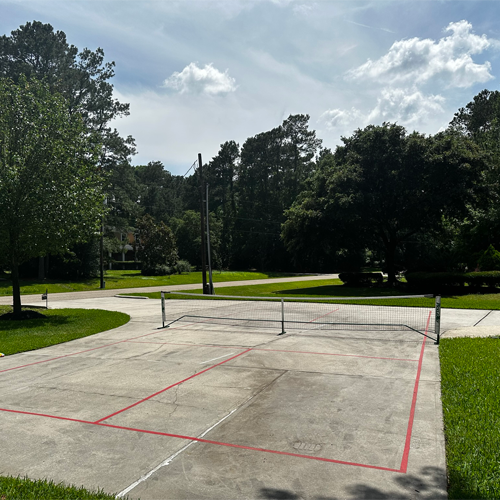
The landscape of pickleball centers is broad, and competition for space can be fierce in some markets. What helps Era Pickleball endure is not just the facility or the schedule, but the consistency of its commitments. The management understands that the sport’s growth depends on reliable access, patient coaching, and a community that feels safe and welcoming. That combination reduces the friction new players typically experience, which in turn accelerates their development from curious onlookers to regular participants who contribute to the center’s vitality.
As a user of the ecosystem, you can leverage Era Pickleball’s strengths at multiple junctures. If you are still exploring the sport, you’ll find introductory clinics that break down the mechanics into digestible steps. If you are aiming to elevate your game, you can enroll in progressive technique workshops that target footwork, shot selection, and mental composure in pressure points. If your schedule is erratic, you can lean into open play slots that maximize your opportunities to practice without overcommitting. And if you want to structure your practice more deliberately, the rental system lets you book a block of time dedicated to a single, well-defined goal.
What follows are some practical takeaways that reflect real-world experience at Era Pickleball. First, arrive with a plan even if you intend to play casually. A 15-minute warm-up that includes light jogging, dynamic stretches, and a few hand-eye coordination drills can dramatically reduce the likelihood of injury and increase your readiness to engage in longer rallies. Second, use the first five minutes of a drill to calibrate your grip and stance. It is easy to default to muscle memory, but the most meaningful gains come when you fine-tune small details that compound over an hour of practice. Third, treat errors as data rather than failure. The center’s coaching framework emphasizes feedback loops that help you translate mistakes into concrete adjustments rather than letting frustration derail your progress. Fourth, make space for social play after a clinic. The social layer of the center is not a distraction; it is a crucial part of reinforcing the habits learned during instruction. Finally, respect the schedule. Pacing the session and sharing the court with others keeps the facility running smoothly and makes it easier for everyone to get the time they need.
In a broader sense, Era Pickleball embodies a trend toward sport as neighborhood infrastructure—safe, accessible, social, and meaningful. It is where children learn the difference between a good shot and a great one, where adults rediscover a workout that is both cardiovascular and cognitive, and where the older crowd maintains balance, range of motion, and a sense of purpose through a sport that remains dynamic and inclusive. The center demonstrates that excellence does not require a grand, impersonal arena; it can flourish in a well-run space that respects beginners as much as it does high-level players and that values the quiet rhythms of daily practice as much as the bright spectacle of competition.
If you want a reliable gauge of what Era Pickleball can offer you or your family, consider how your evenings or weekends tend to fill up. Do you crave a place where you can learn a new skill without feeling overwhelmed? Do you want a community that rewards effort with visible progress rather than with abstract guarantees? Or do you simply want a place to unwind after a long day, surrounded by friendly faces who share a common interest and a readiness to help others improve? The center answers yes to all of these questions, and it does so with a practical, grounded approach that respects both the craft of pickleball and the realities of everyday life.
Two well-curated programs illustrate this balance. First, the Era Pickleball coach-led clinics offer structured progressions that pair technique with strategic concepts, ensuring players don’t practice in a vacuum. These clinics often rotate through a monthly curriculum, focusing on topics like drive consistency, transition shots, and court positioning. They maintain a pace that feels accessible while still challenging, which is exactly what seasoned players look for when they want to push a little further without fear of a plateau. Second, the court rental model is crafted to minimize friction. Booking is straightforward, the calendar is transparent, and the experience of stepping onto a clean court with a reliable paddle in hand feels like a simple, honest exchange between customer and center. It’s this clarity that makes Era Pickleball a reliable anchor in a neighborhood where life moves quickly and plans change by the hour.
In sum, Era Pickleball stands out not only for its facilities pickleball near me but for the way it translates sport into a meaningful everyday habit. It is the kind of place where you measure your improvement by the size of your smiles after a close rally, not by the number of trophies on the wall. It is where novices are welcomed with a structured path to confidence, where veterans find coaching cues that sharpen their game, and where the sense of community is palpable in every drill, every match, and every casual chat in the lounge between sets. If you are seeking a practical, well-run, community-centered pickleball experience, Era Pickleball delivers with a quiet assurance born of experience, thoughtful planning, and a true commitment to making the sport accessible to all.
What people often discover after a few months at Era Pickleball is that the center’s value compounds in subtle ways. You begin to notice your stamina improving, your reflexes sharpening, and your decision-making at the net becoming more decisive. Friends you meet on the court become regular workout partners, share recommendations for drills to practice at home, and become a social circle that extends beyond the hours you spend huddled around a scoreboard. The center respects your time by offering efficient instruction, practical court access, and community-led programming that consistently reinforces the joy of moving well and playing fair.
For someone exploring the idea of dedicating a portion of weekly life to a sport, Era Pickleball offers a clear, workable path. The combination of open play intervals, coached sessions, and rental flexibility means you can tailor your involvement to fit busy schedules without sacrificing your rate of progress. It is a model many communities could emulate—a space that grows with its players, that welcomes beginners with open arms, and that remains a steady, reliable partner in the ongoing pursuit of physical wellness, skill development, and social connection.
Two complementary practices often emerge as particularly impactful for long-term engagement. One is deliberate practice during structured sessions, where a player targets several specific outcomes per week—say, improving the consistency of the third-ball dink, sharpening the backhand drop, or refining the transition from defense to offense. The other is consistent participation in social play that reinforces technique while teaching important strategic lessons in a low-pressure environment. Together, these habits create a balanced development arc: technique becomes instinctive, and decision-making becomes second nature. In communities like the one Era Pickleball serves, that balance can produce a ripple effect, encouraging younger players to join, families to attend together, and neighbors to see the sport as a shared, daily possibility rather than a weekend-only pastime.
As you plan your next visit to Era Pickleball, consider building a micro-ritual that aligns with your goals. Arrive early and map your planned practice, then let the court and the instructor guide your adjustments. After your session, spend a few minutes reflecting on what clicked and what still feels uncertain. If you can, schedule a follow-up session that specifically targets one or two of the rough edges you identified. Small, consistent improvements accumulate into noticeable gains over weeks and months, especially when they are supported by a community that understands the value of steady effort.
The neighborhood-centered approach that Era Pickleball embodies is more than a business model; it is a social contract. The center promises high-quality facilities, reliable access, and thoughtful coaching, and it delivers because the people who run it understand that the sport’s most meaningful returns come from within the player—confidence, resilience, and a sense of belonging. The ripple effects extend beyond the court: kids learn discipline and teamwork, families build shared routines, and new players experience the thrill of mastering a challenge that previously felt unpredictable. In a world where routines often erode under the pressure of competing obligations, a pickleball center like Era Pickleball offers a dependable, constructive anchor.
Two final notes for prospective members or casual visitors. First, plan for a flexible introduction. If you are curious but uncertain, sign up for an introductory session or a short clinic to test the atmosphere and the coaching style. The comfort level you find in those early moments often predicts how consistently you will show up in the weeks ahead. Second, treat court time as a chance to practice, not a performance you must endure. The most satisfying improvements arrive when you embrace the process—the small adjustments that accumulate into clear, durable progress.
Era Pickleball is not merely a place to play. It is a small, well-spaced ecosystem designed to cultivate skill, community, and longevity in a sport that rewards both patience and decisive action. It is easy to slip into the routine of weekend tournaments or casual weekend doubles, but the richer experience lies in the daily practice, the coaching conversations after a tough rally, and the shared laughter that follows a hard round when the score was tight and the atmosphere was friendly. In that sense, Era Pickleball offers more than court time. It offers a home court where the sport you love grows with you, where your improvement mirrors the care that goes into maintaining the space, and where every visit adds one more clear step toward a more confident, capable version of yourself.
What to expect when you walk through Era Pickleball’s doors
- A welcoming front desk that remembers your name and explains the day’s schedule with clarity
- A clean, well-lit court environment that feels purpose-built for both beginners and advanced players
- Access to a thoughtful mix of clinics, open play, and rental options that align with a range of goals
- Coaching staff who explain, demonstrate, and then let you apply the concept in a live drill
- A community-minded atmosphere where players cheer each other on and trades tips without ego
Programs that consistently deliver results
- Intro clinics that translate technique into practical skill for new players
- Progressive technique workshops focused on footwork, control, and shot selection
- Open play sessions that reinforce learning through low-pressure rallying
- Court rentals designed for easy access and predictable scheduling
- Family-friendly blocks that welcome kids and adults to learn together
Era Pickleball stands as a robust example of how a local sports center can become integral to a neighborhood’s physical culture. The attention to coaching quality, court maintenance, and administrative clarity creates a reliable platform for people at every level to pursue improvement while enjoying the social fabric that makes the sport durable. If you are evaluating options for yourself, your family, or your circle of friends, Era Pickleball is worth a closer look. The blend of accessible instruction, flexible pacing, and a welcoming community is precisely the type of combination that keeps people coming back season after season, year after year.